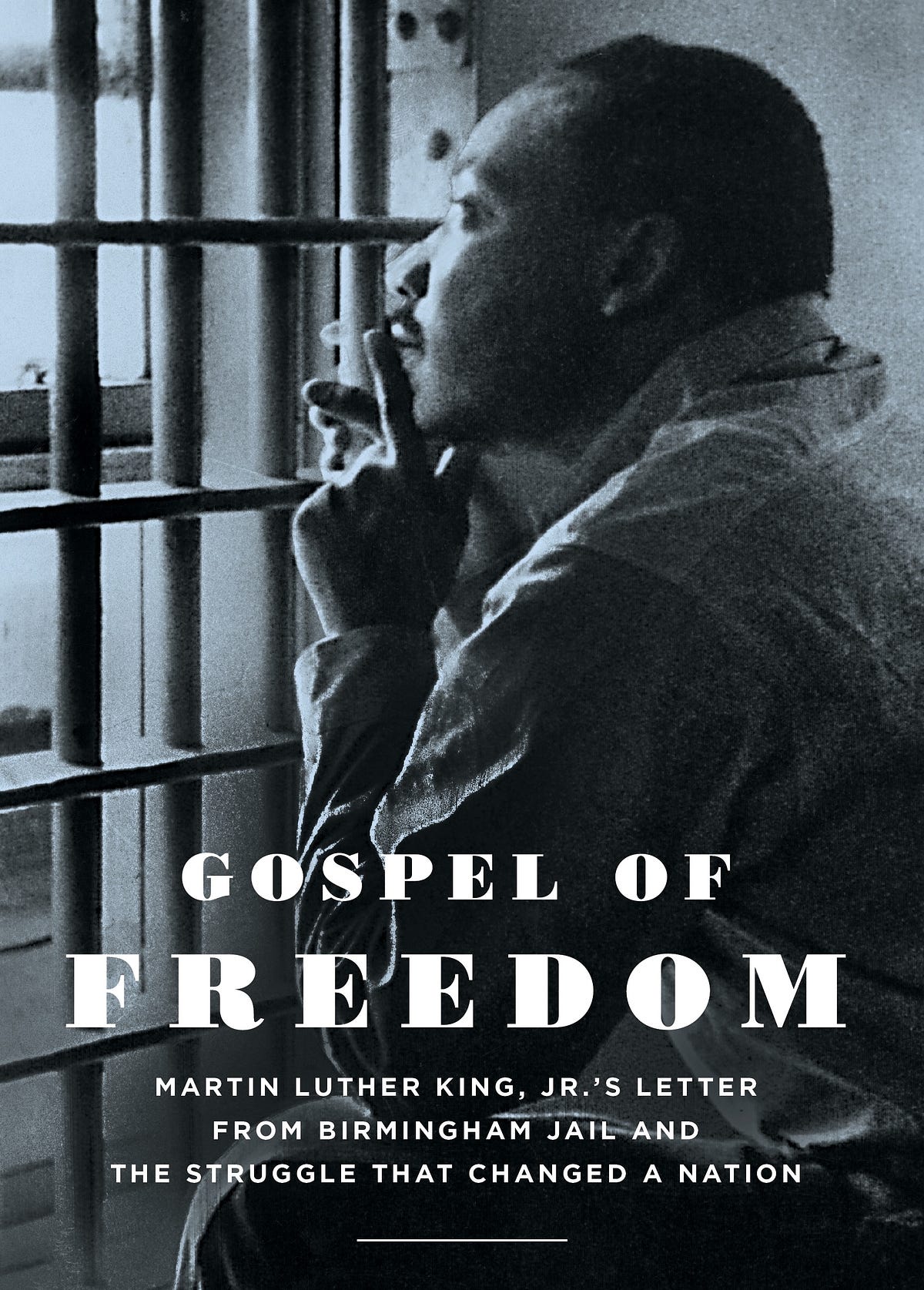
Apr 09, · Dr. Martin Luther King Jr. said that, “Injustice anywhere is a threat to justice everywhere.” To live a good life and as a good person it is not only having the right morals but, it is also acting on them. Many would agree that discrimination of any sort is an injustice. To what extent do you have a responsibility to fight/reduce discrimination? Sep 08, · King also makes his point across by stating that “injustice anywhere is a threat of justice everywhere. We are caught in an inescapable network of mutuality, tied in a single garment of destiny. Whatever affects one directly, affects all indirectly” (). This statement shows that no matter what race, everyone is affected by blogger.comted Reading Time: 4 mins Sep 21, · Injustice Anywhere is a Threat to Justice Everywhere Sabeen Ijaz Ahmed B.B.I.T. (Hons) 4th Year, GIFT University This article won the first prize (Rs. 25, cash) in the 2nd Annual All Pakistan Essay Writing Competition held by Quaid-e-Azam Law College. “Injustice anywhere is a threat to justice everywhere." These powerful words were penned in a letter from a prison cell of Birmingham Jail in
Injustice Anywhere is the Threat to Justice Everywhere Free Essay Example
Injustice Anywhere is a Threat to Justice Everywhere Sabeen Ijaz Ahmed B. Hons 4th Year, GIFT University This article won the first prize Rs. Martin Luther King, injustice anywhere is a threat to justice everywhere essay, Jr.
According to him, all humans are caught in an inescapable network of mutuality, tied in single garment of destiny. Whatever affects one directly, affects all indirectly. Hence injustice with one individual of a society can affect the life of other individuals of the society. Before we make society understand the need of justice in this essay lets first talk about what justice really is. Justice is the ideal, morally correct state of things and persons. Justice is action in accordance with the requirements of some law.
Whether these rules are grounded in human consensus or societal norms, they are supposed to ensure that all members of society receive fair treatment. Justice is distinguished from other ethical standards as required and as, overwhelmingly important: justice can be thought of as distinct from, and more important than, benevolence, charity, mercy, generosity or compassion. All of these things may be valuable, but they are supererogatory rather than required.
We need to know more than this: we need to know what justice is, not merely what it is not, and several answers to that problem have been proposed. Justice is linked, both etymologically and conceptually, to the idea of justification: having and giving decisive reasons for one's beliefs and actions. Hire a subject expert to help you with Injustice Anywhere. So, attempts to understand justice are typically attempts to discover the justification - the source or basis - of justice, and therefore to account for or disprove its overwhelming importance.
Justice becomes more essential for Islamic country like our due to the emphasis of Islamic teachings on justice. As it is said in Quran: "God enjoins justice and kindness, and giving to kinsfolk, and forbids indecency and abomination and wickedness.
In fact, it can be said that the main purpose of revelation and the tasks of Prophets alayhum salam has been to establish Justice. Thus, one of the early scholars of Islam has said that: "Where the signs of Justice appear and its face is shown in any way that is where the Law of God and His religion are found. It can be shown to govern all relations in life: between ruler and ruled, rich and poor, injustice anywhere is a threat to justice everywhere essay, husband and wife, parents and children.
In all our dealings, we are required to stand firmly for justice even if it is against our own self and our kith and kin, for love too can lead to injustice, injustice anywhere is a threat to justice everywhere essay. Be firm in justice as witnesses for God, injustice anywhere is a threat to justice everywhere essay, even in cases against yourselves, your parents or your kin" [Surah Nisa; 4: ] "And if you give your word, you must be just, even though it be against your kin, and fulfill the covenant of God.
For that is what He has commanded you that you may remember. In fact one of the derived principles of the Shar'iah is that all permissible things are permissible provided that no damage or harm results to others from their practice and that in the event that such damage or harm is -suspected or confirmed, the permissible shall be prohibited to avert such damage or harm.
Issues of justice arise in several different spheres and play a significant role in causing, perpetuating, and addressing conflict. Just institutions tend to instill a sense of stability, well-being, injustice anywhere is a threat to justice everywhere essay, and satisfaction among society members, while perceived injustices can lead to dissatisfaction, rebellion, or revolution.
Each of the different spheres expresses the principles of justice and injustice anywhere is a threat to justice everywhere essay in its own way, resulting in different types and concepts of justice; distributive, procedural, retributive, and restorative.
These types of justice have important implications for socio-economic, political, civil, and criminal justice at both the national and international level. Distributive justice, or economic justice, is concerned with giving all members of society a "fair share" of the benefits and resources available.
Fair allocation of resources, or distributive justice, is crucial to the stability of a society and the well-being of its members. When issues of distributive justice are inadequately addressed and the item to be distributed is highly valued, intractable conflicts frequently result. Procedural justice is concerned with making and implementing decisions according to fair processes that ensure "fair treatment.
If people believe procedures to be fair, they will be more likely to accept outcomes, even ones that they do not like. Implementing fair procedures is central to many dispute resolution procedures, including negotiation, mediation, arbitration, and adjudication. Retributive justice appeals to the notion of "just dessert" - the idea that. people deserve to be treated in the same way they treat others.
It is a retroactive approach that justifies punishment as a response to past injustice or wrongdoing. The central idea is that the offender has gained unfair advantages through his or her behavior, and that punishment will set this imbalance straight. While it is difficult to give a complete and adequate definition of justice, most observers can recognize clear examples of serious injustice when they arise.
Such injustice comes in various forms, wherever the norms of distributive justice, procedural justice, or human rights are violated. Political injustice involves the violation of individual liberties, including the denial of voting rights or due process, infringements on rights to freedom of speech or religion, and inadequate protection from cruel and unusual punishment. Such injustice often stems from unfair procedures, and involves political systems in which some but not others are allowed to have voice and representation in the processes and decisions that affect them.
This sort of procedural injustice can contribute to serious social problems as well as political ones. If voting or litigation procedures, for example, are perceived to be unjust, any outcome they produce is liable to be unstable and produce conflict. In addition,; any procedures that are carried out in a biased manner are likely to contribute to problems of religious, ethnic, gender, or race discrimination.
When the procedure in question has to do with employment or wages, such issues can lead to serious economic and social problems. The highly-publicized rape case of Mukhtaran Mai, also referred to as Mukhtar Mai or Mukhtaran Bibi, highlights the Pakistani government's shortcomings in dealing with violence against women and its persecution of rape victims. InMukhtaran was sentenced to be gang raped by a tribal council in the province of Punjab as punishment for her younger brother's alleged affair with a woman from a powerful clan.
After the initial trial, six men were sentenced to death for the gang rape, while eight others were acquitted. However, last June, the Punjab High Court overturned five of injustice anywhere is a threat to justice everywhere essay convictions and reduced the sixth to a life sentence. Mukhtaran has used the money to open two schools in her village, a shelter for abused women and provide her village with an ambulance.
When Mukhtaran was invited to the United States to talk about her case, the Pakistani government - fearing hat she would malign the country's image abroad - denied her travel visa to the United States, and placed her under house arrest.
Only -fallowing great international attention and pressure was the travel ban lifted. While Pakistan's High Court suspended the injustice anywhere is a threat to justice everywhere essay of Mukhtaran's rapists and will be re-examining the case, the government's lassitude in amending the Hudood Ordinances - which place insurmountable obstacles for women to safely and successfully obtain justice in their rape cases - foments an environment in which violence is perpetrated against women with virtual impunity.
If women are unable to prove rape under the Hudood law, which requires four adult Muslim males to have witnessed the crime or the confession of the rapist himself, then the victims themselves may be tried for adultery or fornication.
Mukhtaran is not the only victim of our political injustice. According to press reports cited injustice anywhere is a threat to justice everywhere essay the Pakistan Human Rights Commission, a non-governmental organization, more than 10, women are raped every year in Pakistan, although the real figure is thought to be much higher.
As in all countries, women are often reluctant to report rape, for social reasons as well as distrust of the judicial process.
In Pakistan, there are additional legal barriers to pursuing a rape conviction. The rape law itself, one of the offenses of zina under the Hudood Ordinances, requires either the confession of the perpetrator or the eye-witness testimony of at least four Muslim adult male witnesses to the rape. If she is unable to prove rape, a woman who reports rape to the police is vulnerable to prosecution herself under the Hudood Ordinances for fornication if she is unmarried or adultery if she is married.
In addition to these formidable legal barriers to the prosecution of rape, there have been several reports of police involvement in rapes and gang-rapes and of police protection of those accused of rape, particularly when they are from influential families.
Women who have been raped are also at risk of "honor" killings, whereby a male relative kills them because they are thought to have dishonored the family 's name in the community by transgressing social norms, which is seen to include having been raped. It has been estimated that on average one thousand "honor" killings take place each year in Pakistan. Even the Pakistan Government's National Commission on the Status of Women has recommended repeal of the Hudood Ordinances on the grounds that they are discriminatory towards women and not in accordance with Islamic injunctions.
They are also contrary to the Convention on the Elimination of ; All Forms of Discrimination Against Women CEDAWto which Pakistan is a party, and to the Constitution of Pakistan, which states at Article 25 that " 1 All citizens are equal before law and are entitled for equal protection of law.
Crimes of honor are a pre-Islamic practice deeply rooted in the tribal societies of the North West Frontier Province NWFP where Upper Dir is located, Balochistan province, as well as those of Sindh and Punjab where they are called "karo kari". In these rigidly patriarchal communities, wives, daughters, sisters and mothers are killed for the least sexual indiscretion and upon the slightest suspicion of adultery.
Murders in the name of honor fall under the purview of the customary 'qisas and diyat' law. Riddled with flaws, it makes prosecution extremely difficult.
Activists have been urging the government to reform the law but a bill seeking to bolster secular law against honor killings, injustice anywhere is a threat to justice everywhere essay, presented in parliament last year, was defeated as un-Islamic. Sections of the qisas and diyat law work to the advantage of the accused in the trial and appellate stages.
Under section of the law, an adult wall legal heir of a deceased could use his right of qisas to forgive the accused. Similarly, under sectionthe offence of murder is made a compoundable offence and any heir of a deceased could forgive an accused by compounding his right of qisas after receiving compensation. Since in most honor-related murders, either a husband or parents are the heirs of the slain woman and as the murder takes place in connivance with almost all the family members, they prefer to waive their right of qisas and pardon the accused.
Each time, the judicial response has appeared to violate the basic principles of justice, activists observed. Uzma Mehboob, a women's rights activist, said no FIR was registered in a recent case in a remote hamlet in NWFP's Mardan district where a powerful landowner sprayed his daughter and driver, who had eloped together, with bullets. Economic injustice involves the state's failure to provide individuals with basic necessities of life, such as access to adequate food and housing, and its maintenance of huge discrepancies in wealth.
In the most extreme cases of misdistribution, some individuals suffer from poverty while the elite of that society live in relative luxury.
Such injustice can stem from unfair hiring procedures, lack of available jobs and educationand insufficient health care. All of these conditions may lead individuals to believe that they have not received a "fair share" of the benefits and resources available in that society. Many scholars and activists note that in order to truly address injustice internationally, we must strive to understand its underlying causes.
These causes have to do with underdevelopment, economic pressures, various social problems, and international conditions. Injustice anywhere is a threat to justice everywhere essay, the roots of repression, discrimination, and other injustice stem from deeper and more complex political, social, and economic problems. It is only by understanding and ameliorating these root causes and strengthening civil society that we can truly protect human rights. Addressing political injustice is often a matter of developing institutions of fair governance, such as a responsible police force and judiciary.
Legislative action and executive decision-making should likewise be held accountable. In cases where some groups are excluded from political participation, the state can remedy violations of political rights by promoting political inclusion and empowering subordinate groups. Public decision-making should respond to the will of the citizens, and members of the society should have the opportunity to participate in the formulation, execution, and monitoring of state policies.
In other words, a culture of political involvement and public participation should be fostered. This is often accomplished through the strengthening of the economy and civil society in conjunction with democratization efforts.
In some cases countries require outside assistance for election monitoring, nation-building programs and the development of governmental infrastructure to make their political system more stable. Addressing systemic economic injustice is often a matter of economic reforms that give groups better access to jobs, health care, and education.
In many cases, lack of access to basic services stems from enormous inequalities in resource distribution. Redistribution of benefits and resources can thus-' be an important component of social structural changes to remedy injustice. There are various institutional and economic development reforms that might be put in place to raise living standards and boost injustice anywhere is a threat to justice everywhere essay growth.
In addition, by creating social and economic safety nets, states can eliminate tension and instability caused by unfair resource allocation. A central goal of responding to injustice is paving the way for future peace.
Injustice anywhere is a threat to justice everywhere - Pragna Patel - TEDxExeter
, time: 16:38Injustice anywhere is a threat to justice everywhere." - Essay Blender

Feb 07, · “Injustice anywhere is a threat to justice everywhere. " These powerful words were penned in a letter from a prison cell of Birmingham Jail in , by one of America's best known advocate of equal rights - Dr. Martin Luther King, blogger.comted Reading Time: 8 mins Sep 21, · Injustice Anywhere is a Threat to Justice Everywhere Sabeen Ijaz Ahmed B.B.I.T. (Hons) 4th Year, GIFT University This article won the first prize (Rs. 25, cash) in the 2nd Annual All Pakistan Essay Writing Competition held by Quaid-e-Azam Law College. “Injustice anywhere is a threat to justice everywhere." These powerful words were penned in a letter from a prison cell of Birmingham Jail in Sep 08, · The Supreme Court has ruled that to exercise its jurisdiction under article 32, it is not necessary the affected person should personally approach the court, the court can itself take cognizance of the matter and proceed suo motu or on a petition filed by any public spirited blogger.comted Reading Time: 7 mins


No comments:
Post a Comment